Pool Maintenance
How to Run a Pool Maintenance Business in Australia: Independent vs Franchise
August 10, 2026 · 8 min read
Quick summary
- Check business structure, registrations, licences, insurance and state-specific trade rules before offering services.
- Chemical storage and handling are workplace safety issues, not just pool-care issues.
- Independent operators gain autonomy; franchisees may gain systems, brand and support but accept fees and contractual obligations.
- Route density, repeat customers, technician competence and transparent records drive operating quality.
A pool maintenance business looks simple from the driveway. Test the water. Clean the pool. Check the equipment. Move to the next job. In practice, a sustainable operation depends on route density, chemical safety, technical competence, pricing discipline and repeat customers. The first strategic choice is often whether to operate independently or buy into a franchise system.
Start with the business basics
Business.gov.au says a genuine business carries obligations for tax, insurance, licences, permits, record keeping and reporting. The exact setup depends on your structure and state. Start by choosing a structure, obtaining an ABN, checking licences through the Australian Business Licence and Information Service, and arranging appropriate insurance.
“Businesses and hobbies have very different obligations for tax, insurance, licenses and permits.”
business.gov.au
Know what work you are legally allowed to do
Pool cleaning, water testing, equipment servicing, electrical work, plumbing and construction are not the same activity. Licensing can change by state and by the value or type of work. Queensland, for example, has licensing requirements for certain swimming pool construction, installation and maintenance work above specified thresholds. Do not assume a general pool service business can perform regulated electrical, plumbing or building work.
Treat pool chemicals as a workplace risk
Chemical handling is one of the clearest operational risks in this industry. Safe Work Australia says swimming pool chemicals can be dangerous when stored incorrectly and provides specific guidance on incompatible chemicals, storage and hazardous chemical registers. Vehicles, workshops and retail storage areas all need sensible systems.
“Swimming pool chemicals can be very dangerous when stored incorrectly.”
Safe Work Australia
Independent or franchise?
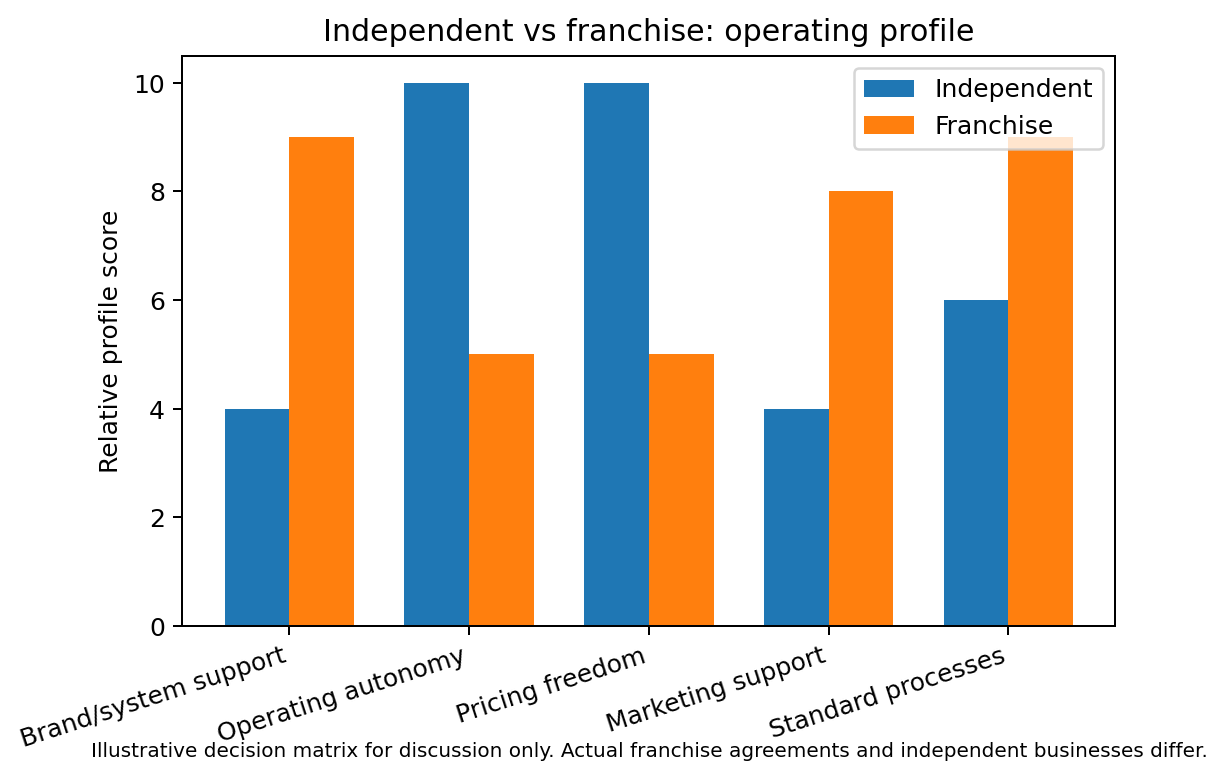
An independent operator generally has more control over brand, pricing, suppliers, service area and customer experience. The trade-off is that the owner must build systems, marketing, training, purchasing arrangements and administration from scratch. A franchise can offer an established brand, operating procedures, training and group purchasing, but it also introduces fees, contractual obligations and less freedom.
| Consideration | Independent business | Franchise business |
|---|---|---|
| Brand | Build your own | Established brand may be included |
| Systems | Owner develops processes | Operating systems may be supplied |
| Pricing | High autonomy | May be influenced by network model |
| Marketing | Owner-funded and managed | Network support may be available |
| Fees | No franchise fees | Initial and ongoing fees may apply |
| Contracts | Supplier/customer contracts | Franchise agreement plus operating contracts |
| Due diligence | Business plan and local market | Plus disclosure document and Code review |
The ACCC’s Franchising Code of Conduct is the starting point for anyone considering a franchise. The current code was introduced on 1 April 2025, with some newer rules applying from 1 November 2025. Prospective franchisees should read the disclosure document, obtain independent legal and financial advice, and speak with current and former franchisees where possible.
“A new Franchising Code of Conduct was introduced on 1 April 2025.”
ACCC
Build the economics around the route
A service business can look profitable on an hourly rate and still lose money in the van. Track travel time, kilometres, chemicals, consumables, card fees, callbacks and administration. Dense routes are valuable because they reduce non-billable travel. Set minimum service charges that reflect the real cost of the visit. Do not compete on chemical mark-up alone.
People, awards and training
If you employ staff, award coverage depends on the work performed. Fair Work guidance says employees servicing pools, including checking water and fixing vacuums, filters and pumps, may be covered by the Manufacturing Award, while employees whose work is pool cleaning may fall under the Cleaning Award. Check the actual role rather than guessing.
Training matters too. SPASA provides industry training and represents service technicians as a distinct part of the pool and spa sector. Technical competence reduces callbacks and helps a business explain recommendations without overselling.
A practical operating checklist
- Use a standard service record for each pool.
- Log water results, chemicals added, equipment observations and photographs where useful.
- Note any recommendation requiring owner approval.
- Separate routine maintenance from repair quotes.
- Keep Safety Data Sheets accessible.
- Review vehicle chemical storage.
- Track recurring revenue, average drive time and callback rates every month.
Summary
There is no universally better model. Independence offers control. Franchising offers systems and brand support. Both still require good route economics, safe chemical handling, accurate technical work and transparent customer communication. Those basics decide whether the business lasts.
Sources and references
- business.gov.au, Guide to starting a business
- business.gov.au, Business registration and support
- ABLIS, Swimming pool construction, installation and maintenance (Queensland example)
- Safe Work Australia, Storage of swimming pool chemicals
- Safe Work Australia, Hazardous chemicals register
- ACCC, Franchising Code of Conduct
- ACCC, Franchise disclosure document
- Fair Work Ombudsman, Award coverage for pool cleaners and repairers
- SPASA Australia
Disclaimer
Hero image: Photo by Ehavuz Market via Pexels. Free to use under the Pexels licence.
Disclaimer: This article is general information for Australian readers and is not a substitute for site-specific advice, manufacturer instructions, water testing, legal advice, electrical or plumbing advice, or the rules applying in your state, territory or local government area. Pool chemistry, equipment requirements, safety obligations, prices and regulations can change. Confirm current requirements with the relevant authority and competent professional before acting. External product or service references are examples and are not endorsements.
Frequently Asked Questions
- What do I need to start a pool maintenance business in Australia? +
- Start by choosing a business structure, obtaining an ABN, checking licences through the Australian Business Licence and Information Service, and arranging appropriate insurance. Business.gov.au outlines the full obligations for tax, licences and record keeping.
- Do I need a licence to service pools in Australia? +
- It depends on the state and the type of work. Queensland, for example, has licensing requirements for certain pool construction, installation and maintenance work above specified thresholds. Do not assume a general service business can perform regulated electrical, plumbing or building work.
- Should I start an independent pool business or buy a franchise? +
- An independent business gives you more control over brand, pricing and operations. A franchise can offer established systems, brand recognition and training but involves fees, contractual obligations and less freedom. Neither is universally better.
- What are the key costs of a pool maintenance franchise? +
- Franchise costs typically include an initial franchise fee, ongoing royalties, marketing contributions and potentially required purchasing arrangements. The ACCC's Franchising Code of Conduct requires disclosure of these costs before you commit.
- How important is route density for a pool service business? +
- Very important. Dense routes reduce non-billable travel time and increase the number of pools you can service per day. Track travel time, kilometres, chemicals, consumables and administration to understand your real cost per visit.
- What chemical safety obligations apply to pool maintenance businesses? +
- Safe Work Australia says swimming pool chemicals can be very dangerous when stored incorrectly. You need proper systems for chemical storage, transport, handling and record-keeping, including maintaining Safety Data Sheets and a hazardous chemicals register.
- What award covers pool maintenance employees? +
- Fair Work guidance says employees servicing pools, including checking water and fixing equipment, may be covered by the Manufacturing Award, while employees whose work is pool cleaning may fall under the Cleaning Award. Check the actual role performed.
- What should I look for in a franchise disclosure document? +
- The ACCC's Franchising Code of Conduct requires franchisors to provide a disclosure document. Read it carefully, obtain independent legal and financial advice, and speak with current and former franchisees before committing.
- Can pool maintenance businesses also sell swim jets? +
- Pool service professionals are well positioned to recommend equipment upgrades like the M Series to clients with suitable pools. Adding swim jet sales can create an additional revenue stream while genuinely improving client satisfaction.
- What training is available for pool maintenance technicians? +
- SPASA provides industry training and represents service technicians as part of the pool and spa sector. Technical competence reduces callbacks, improves customer confidence and helps your business explain recommendations without overselling.
Ready to upgrade your pool?
Explore the Swim Jets Australia range or get a tailored recommendation in two questions.