Swim Jets
Swim Jets for Low-Impact Exercise, Active Ageing & Aquatic Fitness in Australia (2026)
August 8, 2026 · 14 min read
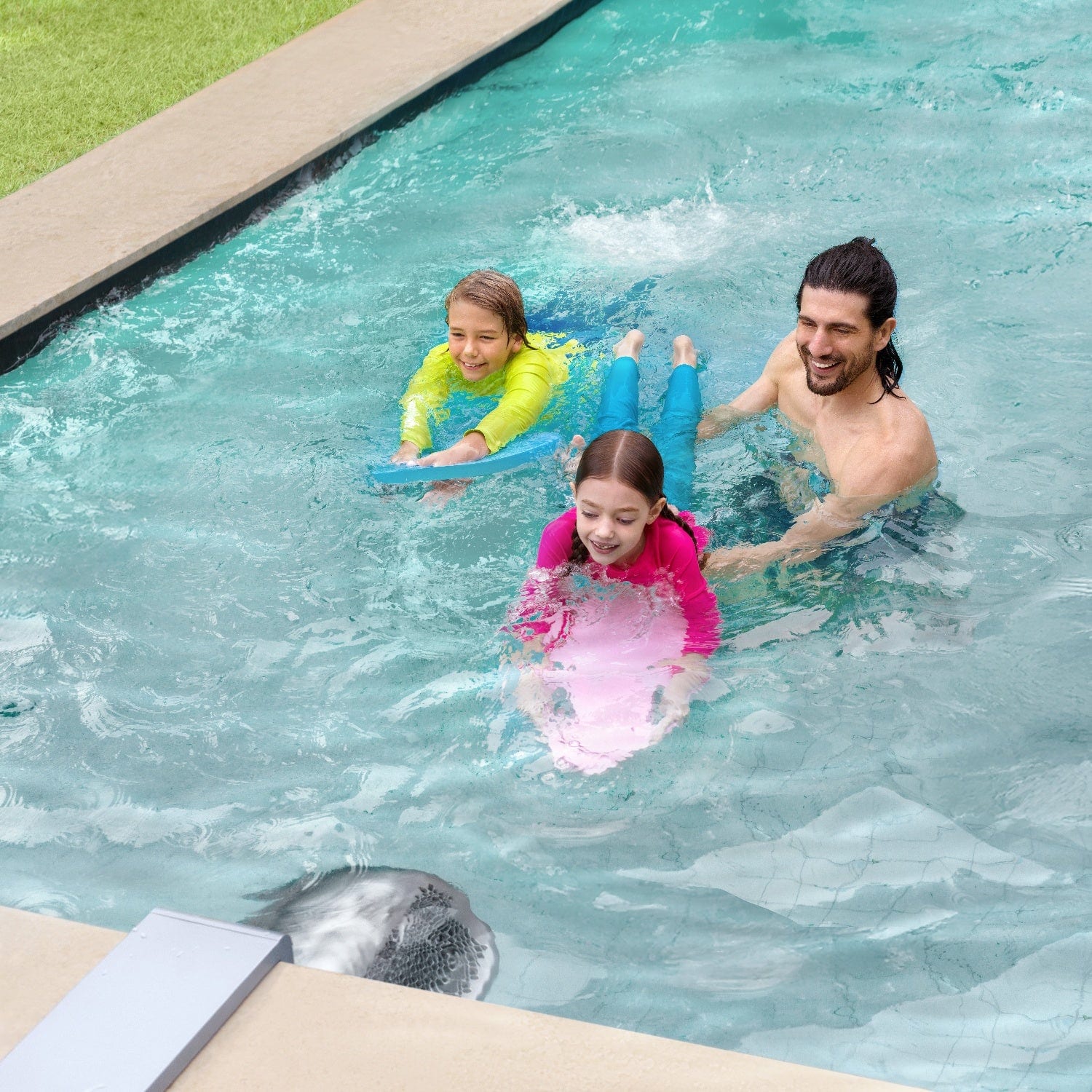
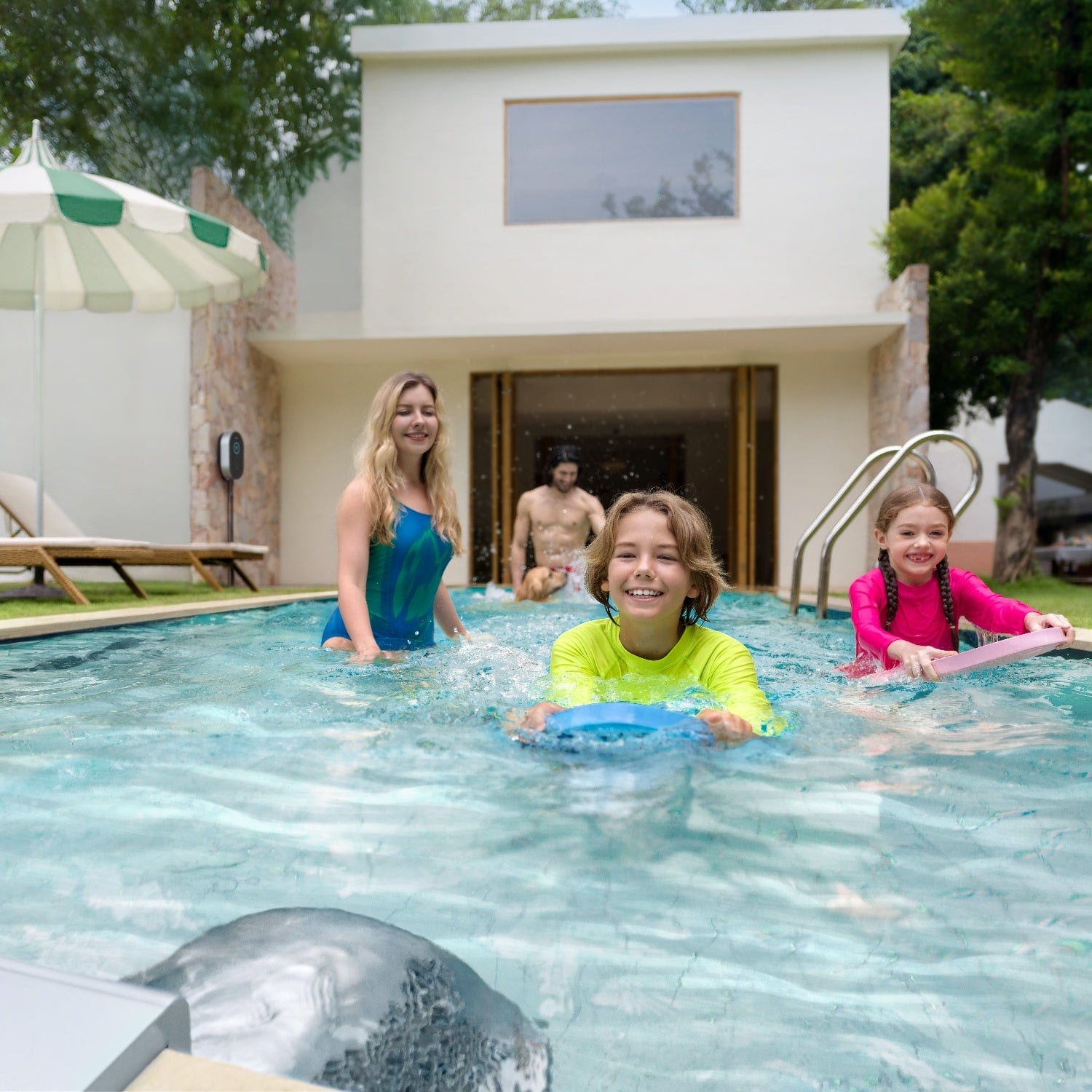
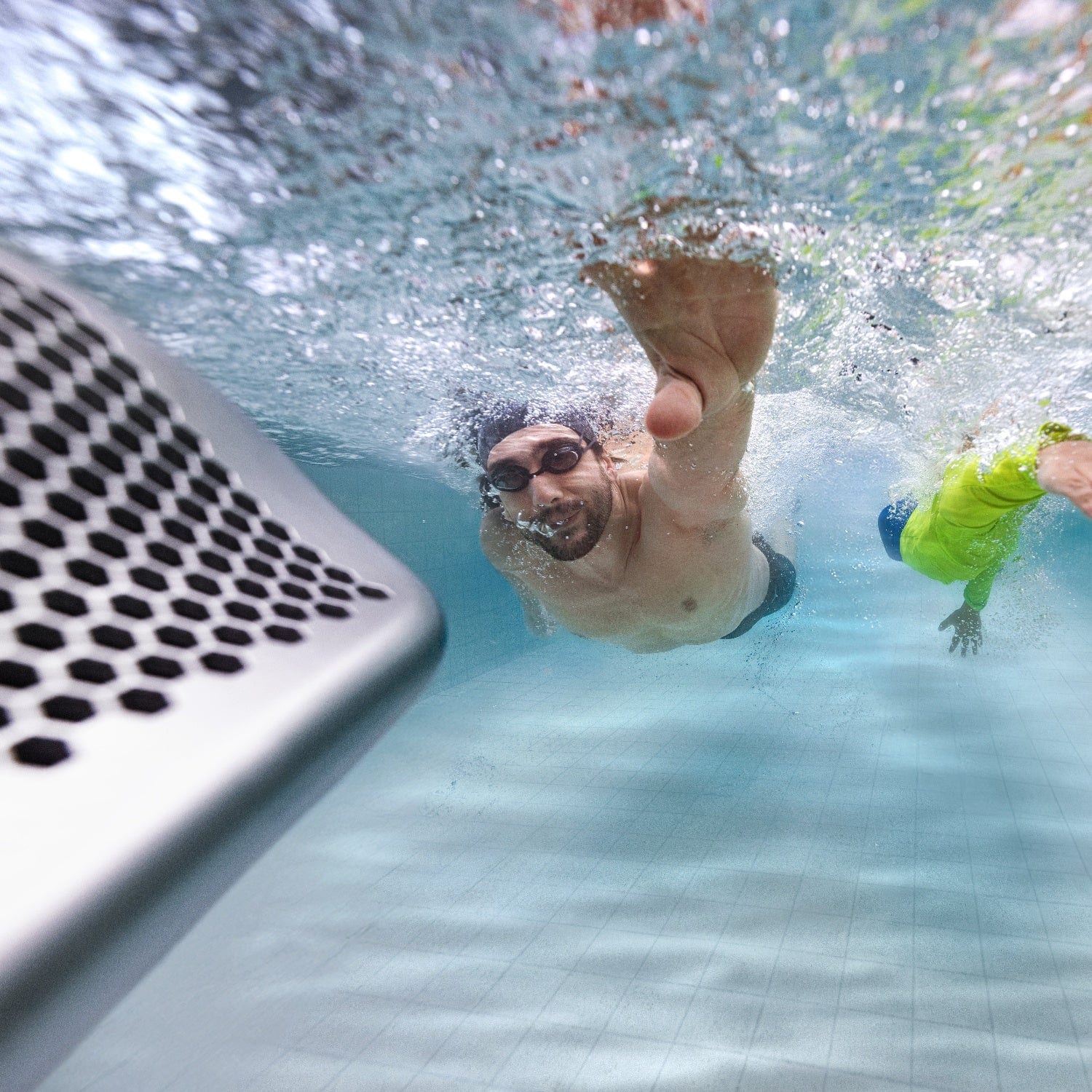
A swim jet can turn a residential pool into a controllable aquatic exercise space by creating moving water that can be used for stationary swimming, gentle resistance work and water-based movement. This can be attractive to Australians who prefer lower-impact exercise, want to stay active as they age, or value the convenience of exercising at home. A swim jet is not a medical treatment or a substitute for clinical hydrotherapy. People with medical conditions, injury, balance limitations or rehabilitation needs should follow advice from an appropriately qualified health professional before using a home swim-jet program.
Key facts
- Australian Government guidance recommends adults and older adults remain active regularly, including moderate-to-vigorous activity, strength work and activities targeting mobility, balance and coordination.[1][2]
- Water-based exercise can provide a practical way to be active, and Healthdirect describes swimming and aqua exercise as options for building strength and fitness.[3]
- A swim jet can provide adjustable resistance without requiring a long lap pool.
- Low settings may support gentle swimming, walking and controlled movement; higher settings can support more demanding fitness work where appropriate.
- A home swim jet is exercise equipment, not a medical device and not the same as clinician-supervised hydrotherapy.
- Recent systematic reviews report that aquatic exercise can improve aspects of physical performance in older adults, although results vary and water exercise is not necessarily superior to land exercise.[4][5]
- Safety, easy access, clear footing, simple controls and the ability to stop the current quickly become especially important for older or less confident users.
Why aquatic exercise is relevant to active ageing
Staying active becomes more important, not less, as people age. Australia's current 24-hour movement guidelines recommend that older adults undertake moderate- to vigorous-intensity physical activity for 30 minutes or more on most days, muscle-strengthening activity on two or more days per week, and functional activity targeting mobility, balance and coordination on three or more days per week.[2]
There is also a large participation gap. The Australian Institute of Health and Welfare reports that in 2022, 57% of adults aged 65 and over were insufficiently physically active, while 84% did not do at least two days of muscle-strengthening activity.[6] This does not mean a swim jet is the answer for everyone, but it shows why convenient forms of movement that people are willing and able to repeat can matter.
Swimming is already deeply established in Australian life. The Australian Sports Commission estimates that 3.483 million Australians aged 15 and over participated in swimming at least once during 2025.[7] A home counter-current system can remove one practical barrier for some households: the need for a long pool or repeated travel to a lap-swimming facility. For an overview of how these systems work, see the complete guide to counter-current swimming systems.
What makes exercise in water different?
Water changes how exercise feels. The body is supported by buoyancy while movement is resisted by the water itself. That combination can make many forms of movement feel different from their land-based equivalent and can allow intensity to be adjusted through speed, body position and current strength.
Healthdirect notes that water-based exercise classes can help build strength and fitness, and that hydrotherapy may be used in recovery settings when exercises are guided and tailored by a physiotherapist or exercise physiologist.[3] That distinction is important: general home aquatic fitness and clinical hydrotherapy may both happen in water, but they are not the same service and should not be marketed as interchangeable.
What does the research say about aquatic exercise for older adults?
The evidence supports a measured rather than exaggerated message. A 2024 systematic review and meta-analysis of 10 randomised controlled trials involving 603 older adults found aquatic exercise probably improved some measures of physical performance compared with non-exercise controls, while comparisons with land-based exercise did not show clear superiority for dynamic balance.[4]
A 2026 systematic review of 15 studies reported improvements in cardiorespiratory capacity, muscle strength and agility or dynamic balance compared with control groups. However, the included studies varied in quality and some outcomes had substantial heterogeneity.[5] Earlier research also concluded aquatic exercise may improve physical functioning in healthy older people and can be at least as effective as land exercise, while noting limitations in study quality.[8]
For a homeowner, the practical interpretation is straightforward: water-based exercise can be a legitimate way to stay active, but a swim jet should not be sold with promises to treat disease, prevent falls, rehabilitate an injury or replace professional care.
How a swim jet can broaden a home pool's exercise use
A conventional small backyard pool can be difficult to use for continuous exercise because the user reaches the wall after only a few strokes. A swim jet solves that specific limitation by moving the water toward the user. The current can then be adjusted so the pool supports different activities without requiring a full lap-pool footprint.
| Activity | Typical current | Primary aim | Key caution |
|---|---|---|---|
| Gentle stationary swimming | Low to moderate | Comfortable continuous movement | Use a setting that allows relaxed technique and easy stopping |
| Water walking | Low | General movement and resistance | Footing, depth and balance must suit the user |
| Upper-body resistance movement | Low to moderate | Controlled movement against water | Avoid improvised exercises if pain or instability is present |
| Continuous fitness swimming | Moderate | Aerobic exercise | Build gradually and maintain safe technique |
| Intervals | Moderate to high | Higher-intensity fitness for capable users | Not appropriate for everyone; intensity should match fitness and health status |
Low-impact exercise does not mean no effort
The phrase 'low impact' is sometimes misunderstood as 'easy'. Water can reduce the impact associated with many land-based movements, but a strong current can still create substantial muscular and cardiovascular demand. The user controls intensity through the swim-jet setting, movement speed, session duration and exercise choice.
For many households, the most valuable feature is therefore not maximum power but fine control at the lower and middle settings. A system that jumps too quickly from gentle to demanding may be less useful for mixed-age users than one with smooth increments.
Active ageing: design for confidence and repeatability
An exercise system only helps if people feel confident using it repeatedly. For older adults, pool design and equipment controls can matter as much as the jet's performance. Entry should feel secure, the floor should be predictable, and the user should be able to start, reduce and stop the current without rushing.
- Provide an entry method appropriate to the intended users, such as well-designed steps or a handrail where suitable.
- Keep the exercise area free of ladders, sharp corners, loose equipment and unnecessary obstacles.
- Use conservative current settings first and increase only when the user is stable and comfortable.
- Make the stop control obvious and easy to reach.
- Avoid requiring the user to climb over or around the swim-jet equipment.
- Consider water temperature, lighting, cover handling and the path from the house to the pool because these affect whether the pool is actually used.
Portable swim jets and active-ageing households
Portable swim jets can be particularly relevant where a household already has a pool and wants to add exercise capability without a major renovation. They can also suit owners who want to test whether a counter-current becomes part of their regular routine before committing to structural changes. The retrofit guide covers the practical steps for adding a swim jet to an existing pool.
For this market, 'portable' should not be interpreted as a reason to relax safety standards. The unit must be secure, controls must be understandable, the swimming area must remain clear and any electrical requirements must be handled in accordance with manufacturer instructions and applicable Australian requirements. A portable system should also be evaluated for the quality of its low-speed current, not merely its maximum output.
Home aquatic fitness is not clinical hydrotherapy
This distinction should be explicit in any consumer marketing. Healthdirect describes hydrotherapy as water therapy in which a physiotherapist or exercise physiologist guides and tailors exercises to the individual's needs.[3] A residential swim jet, by contrast, is general-purpose pool and exercise equipment unless it is being used within a program directed by an appropriately qualified professional.
Claims such as 'rehabilitates injuries', 'treats arthritis', 'prevents falls' or 'improves a specific medical condition' should not be made simply because exercise occurs in water. The safer and more accurate language is that a swim jet can support general aquatic activity, continuous swimming and adjustable resistance exercise.
People returning to activity after surgery or injury, or those with cardiovascular, neurological, musculoskeletal or balance concerns, should obtain individual advice. Healthdirect also advises that people new to swimming who are older than 55 consider speaking with their doctor before starting, particularly if they have a health condition.[3]
A sensible progression for general fitness users
The goal for a new user is consistency, not proving how much current they can tolerate. A progressive routine can start with familiarisation and short periods of easy movement, then add duration or resistance gradually. This mirrors the Australian Government's broader guidance for people with chronic conditions to start slowly and build up where possible, with professional help when needed.[9]
- Familiarisation: learn the controls and practise stopping the system.
- Easy movement: use a low current for gentle swimming or water walking.
- Build duration: increase the time spent moving before chasing higher resistance.
- Add moderate resistance: increase the current only while body position and confidence remain stable.
- Vary activity: alternate swimming, gentle resistance and rest rather than repeating one demanding movement.
- Review comfort: stop and seek appropriate advice if exercise produces concerning symptoms, unusual pain, dizziness or instability.
Can swim jets support strength and mobility work?
Water provides resistance in multiple directions, so controlled movements can challenge the muscles without traditional gym equipment. This is one reason aquatic exercise programs are studied for physical function in older adults.[4][5] In a home pool, low to moderate current can add resistance to walking or controlled upper- and lower-body movement.
However, a swim jet does not automatically provide a complete strength, balance or mobility program. Australia's movement guidelines recommend a mix of activity types, and a home aquatic routine can be one component of that broader pattern rather than a replacement for every form of exercise.[1][2]
Swimming for confidence, not competition
Many older adults are not trying to swim fast. They may value the ability to move continuously without turns, select a gentle pace and exercise privately at home. A counter-current can be useful because it turns time, rather than distance, into the main measure. Ten controlled minutes at an easy setting is straightforward to understand and repeat. For more structured training ideas, see the guide to swim jets for swimming, training and home fitness.
Less confident swimmers should not assume the current will hold them safely in one place. Strong moving water can alter body position quickly. New users should begin at very low output, have a clear exit strategy and avoid exercising alone where supervision would be prudent.
Pool design considerations for older users
- Entry and exit: steps, rails and deck transitions should suit the intended users.
- Depth: choose a depth appropriate to swimming and standing activities; a single depth may not suit every purpose.
- Footing: keep standing exercise areas predictable and free of trip hazards.
- Controls: use simple, accessible controls and a clearly understood stop method.
- Lighting: good visibility matters for steps, water edges and evening use.
- Temperature: comfort strongly influences willingness to exercise, while individual medical advice may be needed where heat sensitivity or health conditions are relevant.
- Cover handling: a cover that is too difficult to remove can become a practical barrier to regular use.
- Equipment placement: fixed or portable swim-jet equipment should not obstruct access or create a new hazard.
Safety and Australian pool obligations
Normal residential pool safety remains essential regardless of the user's age. Pool barriers must remain compliant, children require appropriate supervision, and electrical work in the pool environment should be completed by appropriately licensed trades. State and territory rules differ. NSW Government guidance, for example, requires owners to maintain child-resistant barriers and notes that pool renovations or barrier alterations can affect compliance obligations.[10]
Older adults may also have individual safety considerations that are not captured by building rules. Medication effects, reduced balance, unfamiliar exercise intensity and difficulty entering or exiting the pool can all change risk. These are reasons to design conservatively and seek personal medical or allied-health advice where relevant.
Choosing a swim jet for mixed-age fitness use
- Prioritise a wide adjustment range with genuinely usable low settings.
- Ask how broad and stable the current is, not only how powerful it is.
- Check whether controls can be reached and understood from the exercise position.
- Confirm a rapid and obvious way to stop the current.
- Measure the swimming and standing zones with the actual intended users in mind.
- Compare built-in, retrofit and portable swim jets if the pool already exists.
- Confirm electrical input, installation requirements and Australian service support.
- Ask how the equipment is secured and serviced, especially for portable systems.
- Avoid medical or rehabilitation expectations unless a qualified health professional is directing the program.
Frequently asked questions
Are swim jets good for older adults?
They can provide a convenient way to swim or exercise against adjustable water resistance, but suitability depends on the individual's health, swimming confidence, balance, pool access and the system's controls. Medical or allied-health advice may be appropriate before starting.
Is exercising against a swim jet low impact?
Water-based exercise can reduce some of the impact associated with land exercise, but the effort can still be substantial. Current strength and session design should be matched to the user.
Can a swim jet be used for water walking?
At lower settings, some systems can add resistance to walking and controlled movement, provided the water depth, footing and user's balance are appropriate.
Is a home swim jet the same as hydrotherapy?
No. Hydrotherapy is a clinical or therapeutic service in which exercises may be prescribed and supervised by qualified professionals. A home swim jet is general exercise equipment unless used under professional direction.
Can a portable swim jet be used for gentle exercise?
Potentially. The most important questions are whether the low settings are controllable, the unit is securely installed, the exercise area is clear and the user can stop the current easily.
Should someone over 55 see a doctor before starting?
Healthdirect advises people new to swimming who are older than 55 to consider speaking with their doctor before starting, especially if they have a health condition.[3]
Can aquatic exercise replace walking or strength training?
It can contribute to an active lifestyle, but Australian movement guidelines recommend a variety of physical activity, including muscle-strengthening and functional activities. A balanced program may include both water- and land-based exercise where appropriate.
Conclusion
A swim jet can make a home pool more useful for Australians who want regular, adjustable aquatic exercise without needing a long lap pool. For active-ageing households, the strongest features are often controllability, convenient access and the ability to build a repeatable routine rather than maximum current strength.
The evidence supports water-based exercise as a legitimate fitness option, but responsible communication matters. A home swim jet should be positioned as equipment for swimming, movement and general fitness - not as a treatment or guaranteed rehabilitation tool. When individual health needs are involved, qualified medical, physiotherapy or exercise-physiology advice should lead the program.
References and authoritative sources
- Australian Government Department of Health - 24-hour movement guidelines for all Australians: health.gov.au
- Australian Government Department of Health - recommendations for older adults 65 years and over: health.gov.au
- Healthdirect Australia - health benefits of swimming: healthdirect.gov.au
- PubMed - Effects of Aquatic Exercise on Physical Performance in Older Adults: systematic review and meta-analysis, 2024: pubmed.ncbi.nlm.nih.gov
- PubMed - Effects of Water-Based Aerobic Exercises on Physical Fitness in Older Adults: systematic review and meta-analysis, 2026: pubmed.ncbi.nlm.nih.gov
- Australian Institute of Health and Welfare - physical activity: aihw.gov.au
- Australian Sports Commission - Swimming participation, AusPlay data: ausport.gov.au
- PubMed - The effect of aquatic exercise on physical functioning in the older adult, systematic review with meta-analysis: pubmed.ncbi.nlm.nih.gov
- Australian Government Department of Health - recommendations for people with chronic conditions: health.gov.au
- NSW Government - pool and spa owner obligations: nsw.gov.au
- Standards Australia - Australian Standards information: standards.org.au
- Australian Building Codes Board - National Construction Code: ncc.abcb.gov.au
Frequently Asked Questions
- Are swim jets suitable for older adults? +
- They can provide a convenient way to swim or exercise against adjustable water resistance. Suitability depends on the individual's health, swimming confidence, balance and pool access. Medical or allied-health advice may be appropriate before starting.
- Is exercising against a swim jet considered low impact? +
- Water-based exercise can reduce some of the impact associated with land exercise, but the effort can still be substantial depending on the current strength. The M Series offers five swim modes, allowing you to start at a gentle setting and increase gradually.
- Can I use a swim jet for water walking? +
- Yes, at lower settings. The M Series can add gentle resistance to walking and controlled movement, provided the water depth, footing and your balance are appropriate. Start at the lowest setting and progress slowly.
- Is a home swim jet the same as hydrotherapy? +
- No. Hydrotherapy is a clinical or therapeutic service where exercises are prescribed and supervised by qualified professionals such as physiotherapists. A home swim jet is general exercise equipment unless used under professional direction.
- What safety features matter for older users? +
- Simple, accessible controls and a clearly understood stop method are essential. The M Series provides touchscreen, remote and app control. Entry and exit should feel secure, and the exercise area should be free of obstacles.
- Should someone over 55 see a doctor before using a swim jet? +
- Healthdirect advises people new to swimming who are older than 55 to consider speaking with their doctor before starting, especially if they have a health condition. This is a sensible precaution for any new exercise program.
- Can a swim jet support both gentle exercise and stronger training? +
- Yes. The M Series offers a wide adjustment range with five swim modes. The lowest settings support gentle swimming and water walking, while higher settings challenge stronger swimmers. This makes it suitable for mixed-age households.
- What pool features help older adults use a swim jet safely? +
- Well-designed steps or handrails for entry, a predictable floor surface, good lighting, comfortable water temperature and easy-to-reach controls. The swimming area should be clear of ladders, sharp corners and loose equipment.
- Can aquatic exercise with a swim jet replace walking or gym work? +
- It can contribute to an active lifestyle, but Australian movement guidelines recommend a variety of physical activity including muscle-strengthening and functional activities. A swim jet routine can be one component of a broader exercise pattern.
- How should a new user start with a swim jet? +
- Begin by learning the controls and practising stopping the system. Start with a low current for gentle swimming or water walking, build duration before increasing resistance, and stop if exercise produces concerning symptoms or unusual discomfort.
Ready to upgrade your pool?
Explore the Swim Jets Australia range or get a tailored recommendation in two questions.