Swim Jets
Swim Jets for Small, Compact & Plunge Pools in Australia (2026)
August 8, 2026 · 13 min read
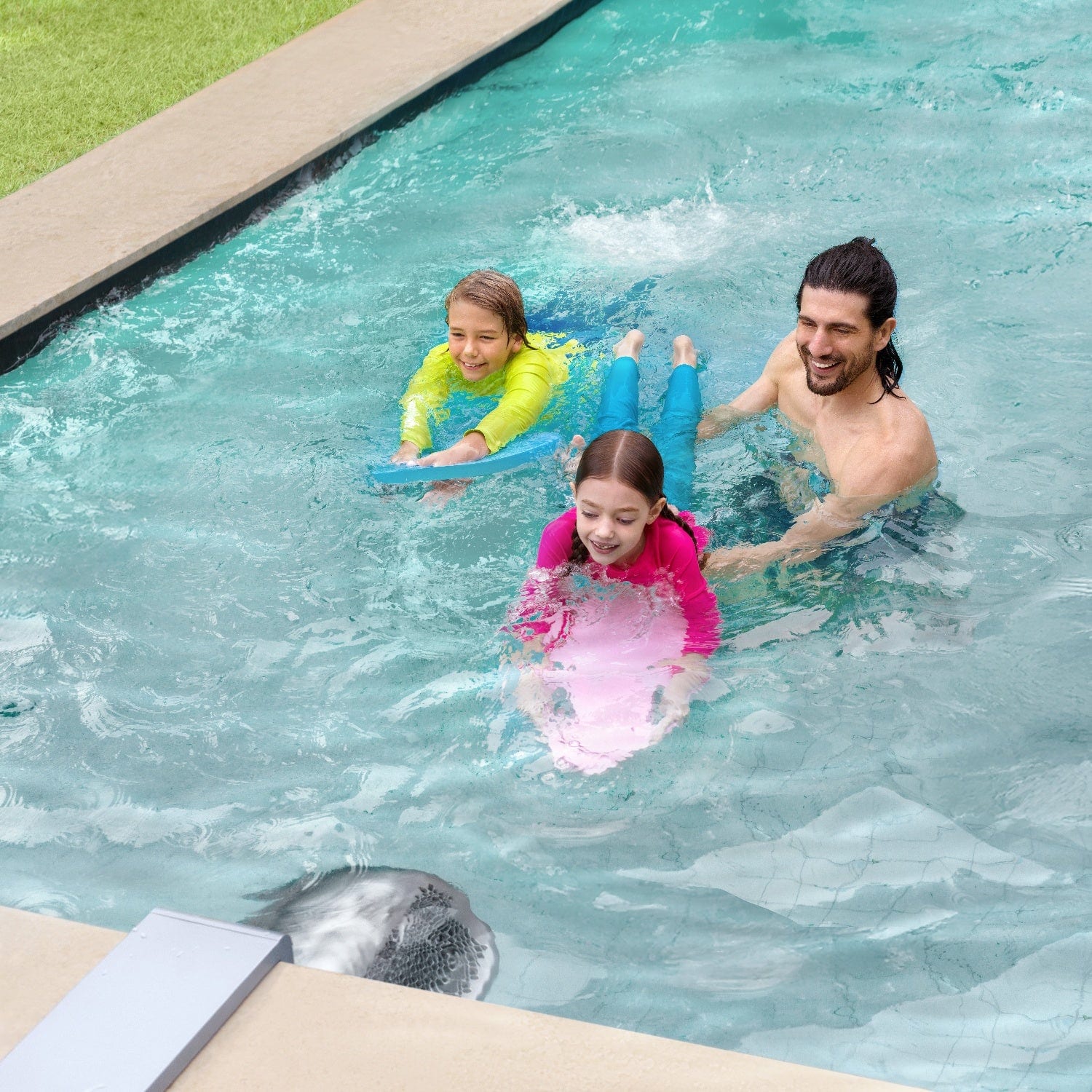
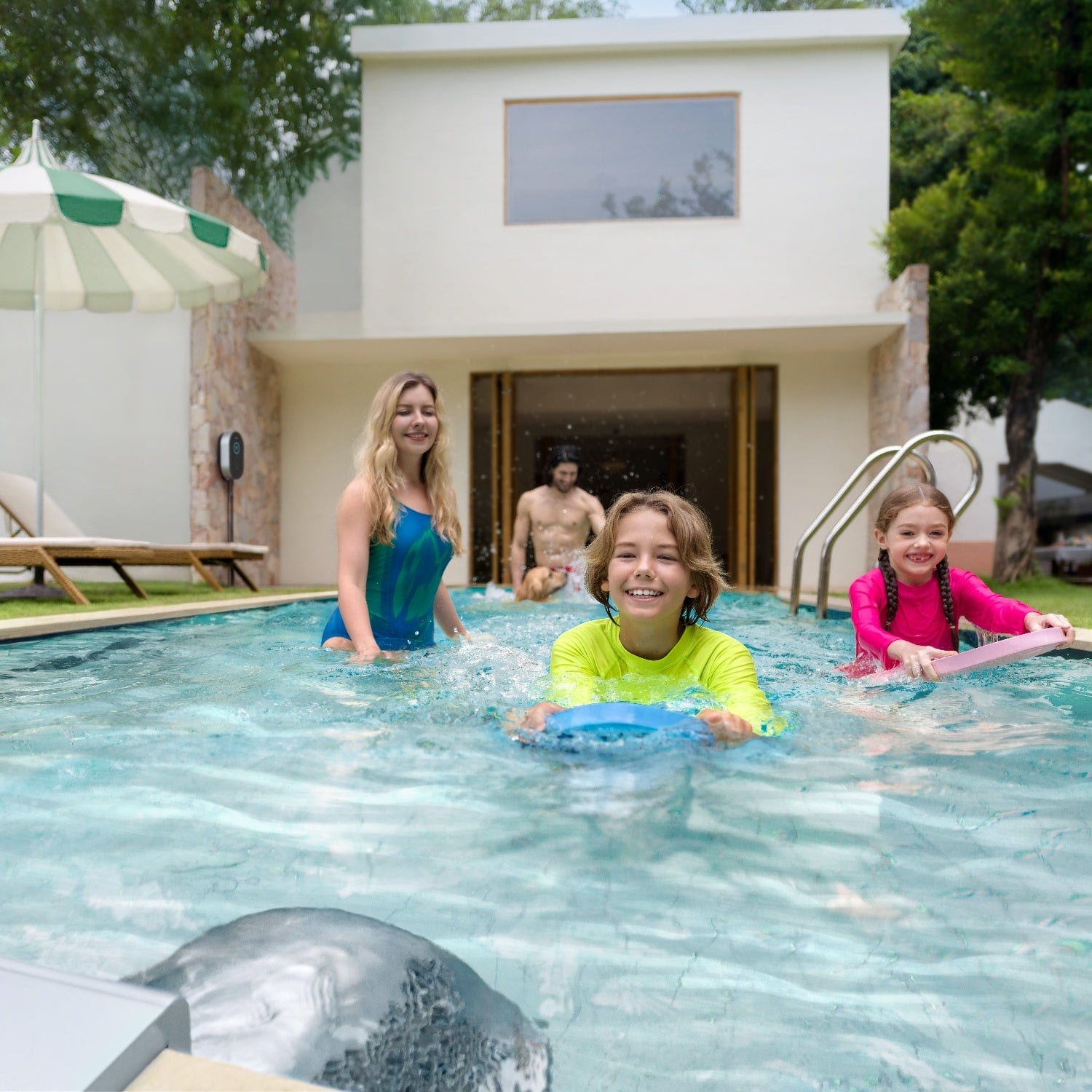
A compact or plunge pool does not have to be limited to cooling off and relaxation. A swim jet creates a controllable current so the swimmer can remain broadly in one position, allowing continuous swimming without a conventional lap-pool length. For Australian homeowners planning a new pool or major renovation, the combination can make a small footprint work harder: one area can support relaxation, family use and exercise. The key is to design the swimming zone, current, depth, access, services and safety environment together rather than treating the swim jet as a late accessory. For a broader overview of system types and features, see the complete guide to counter-current swimming systems.
Key facts
- A swim jet can make continuous swimming practical in a short pool because the swimmer moves against the water current rather than travelling the length of the pool.
- Compact pools still need a clear swimming zone: length is reduced, but width, depth, arm clearance and safe drift space still matter.
- Built-in swim jets are easiest to integrate when planned with a new pool; retrofit and portable swim jets can reduce structural work in renovations.
- A broad, controllable current is normally more useful than judging a system by motor power alone.
- Steps, benches, spa seats and beach entries should be positioned so they do not interrupt the main swimming line.
- Pool barriers, electrical work and construction obligations vary across Australia; homeowners should obtain project-specific advice from qualified professionals.
- Swimming is already a major Australian activity: the Australian Sports Commission estimates 3.483 million Australians aged 15+ participated in swimming at least once in 2025.[1]
Why swim jets suit compact Australian pools
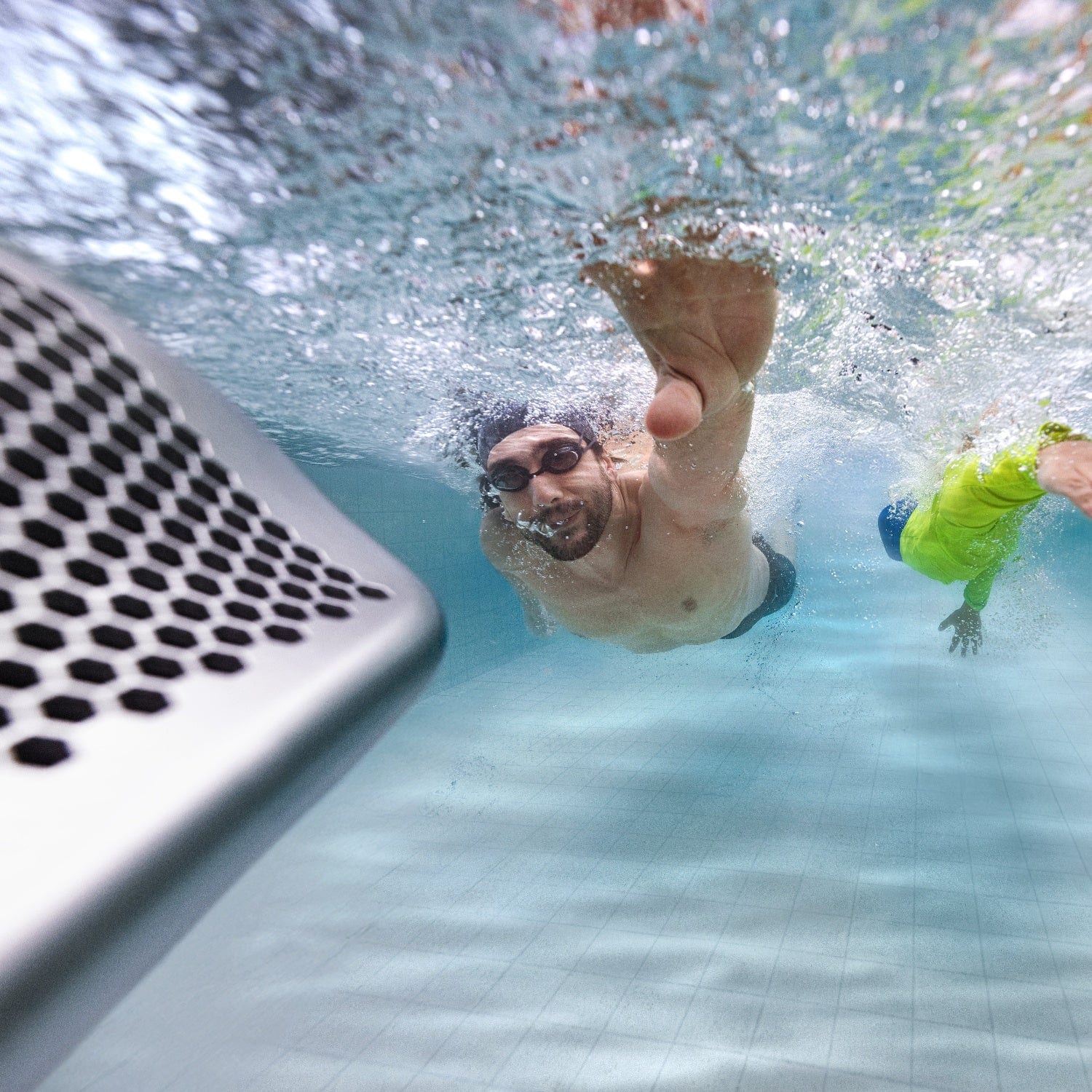
The basic problem with a small pool is simple: there may be enough water for recreation, but not enough length for repeated swimming. Counter-current swimming changes the geometry of the exercise. The swimmer faces a moving flow and stays approximately in place, so usable swimming time is no longer tied to the distance between two walls.
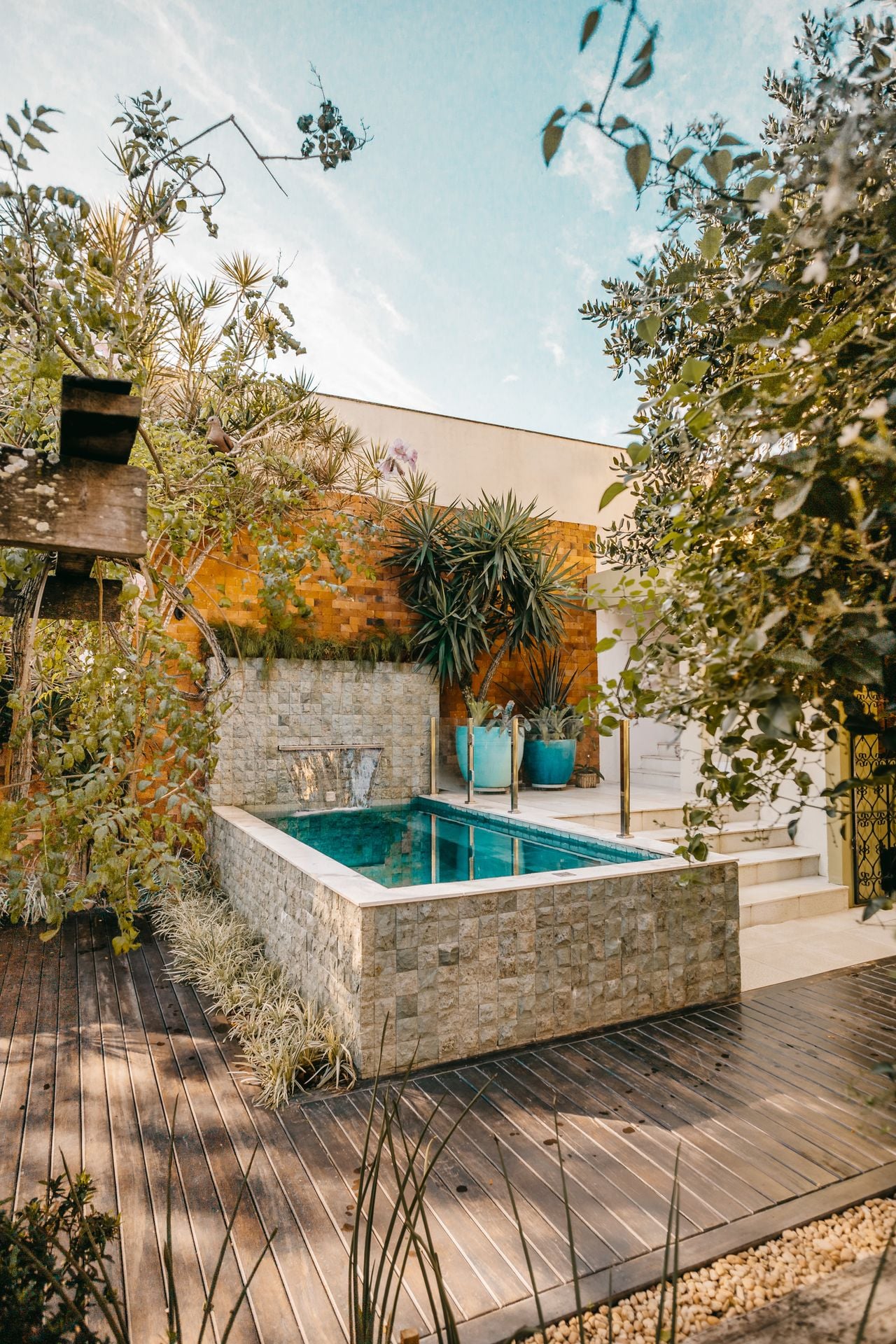
This is particularly relevant to courtyards, narrow suburban blocks, townhouse gardens and plunge-pool projects where outdoor space must also accommodate entertaining, landscaping and circulation. The Australian pool industry increasingly recognises compact pools as serious design projects rather than miniature versions of traditional pools; SPASA's 2025 NSW awards included a dedicated Small Pool of the Year category and highlighted a compact inner-city project combining a plunge pool, spa seat, courtyard and entertaining areas.[2]
A swim jet does not magically make every tiny pool suitable for every stroke or swimmer. The better way to think about it is functional density: the pool can deliver more uses per square metre if the swimming zone is deliberately protected from obstructions and the current is appropriate for the intended user.
Plunge pool, compact pool or lap pool: what changes?
| Pool type | Typical priority | Main limitation | How a swim jet can help |
|---|---|---|---|
| Plunge pool | Cooling, relaxation, compact lifestyle | Usually too short for conventional laps | Adds stationary swimming and resistance exercise |
| Compact family pool | Mixed recreation and family use | Limited uninterrupted swim distance | Creates a dedicated current-based swim zone |
| Lap pool | Distance swimming | Requires substantial site length | Can add adjustable resistance but is less essential for basic continuous swimming |
| Existing small pool | Use what is already built | Geometry and finishes already fixed | Retrofit, external or portable systems may add function with less rebuilding |
Start with the household, not the hardware
Before selecting a swim jet, define who will actually use it. A compact pool for relaxed exercise has a different brief from one intended for a strong swimmer, triathlete or household with several users of different ability levels. The intended use should determine the resistance range, current quality, pool depth and the amount of unobstructed water you protect for swimming.
- Recreational swimming: prioritise gentle low settings, easy controls and a comfortable, stable current.
- General home fitness: prioritise a broad adjustment range that supports both steady swimming and resistance exercise.
- Serious swim training: prioritise current width, stability, sustained output and enough clear water for body drift under harder efforts. See the training and fitness guide for session formats.
- Family pool use: make sure the swim zone can coexist safely with steps, seating and normal circulation.
- Future flexibility: if you are unsure how often the system will be used, consider whether a portable swim jet gives you a lower-commitment way to add counter-current swimming.
Design the swimming line before the seating
In a compact pool, every feature competes for space. A wide bench, tanning ledge or spa seat may look attractive on plan but can leave the swimmer with an awkward diagonal path or force the current directly into a step. The primary swim line should therefore be drawn on the plan before the final location of internal features is locked in.
The swimmer needs enough width for a natural stroke, enough depth for the intended movement, and enough clear water behind the body to tolerate some drift. The outlet should not propel the swimmer toward a ladder, sharp corner, step edge or other obstacle. A pool builder should also consider how the current will interact with return jets, skimmers and the pool's general circulation.
How much pool length do you need?
Counter-current swimming greatly reduces the importance of pool length, but there is no single minimum dimension that applies to every swim jet. Each manufacturer may specify different clearances, mounting heights and water-depth requirements. Stronger swimmers can also drift farther under hard efforts than casual users.
For that reason, homeowners should avoid buying a system first and trying to 'make it fit' later. Ask the supplier for the exact installation drawing and minimum swimming envelope, then test those dimensions against the real pool plan. If possible, mark the intended swimmer position on the drawings, including arm span and the area behind the feet.
Current quality matters more than headline power
The most powerful-looking specification is not automatically the best swimming experience. A narrow high-speed jet can feel forceful yet require constant correction. A wider, more coherent current can distribute resistance across more of the swimmer's body and make it easier to hold position.
- Flow width: does the current cover enough of the swimmer's body to avoid a narrow blast?
- Flow stability: is the water relatively even or highly turbulent?
- Adjustment range: can the current be reduced for beginners and increased for stronger users?
- Control access: can the swimmer change output or stop the system conveniently?
- Sustained performance: can the system maintain the desired output for the intended session length?
Built-in swim jets for a new compact pool
A new pool gives the homeowner the greatest freedom because the counter-current system can be coordinated before the structure and finishes are built. This allows the builder to resolve shell penetrations, equipment space, electrical supply, controls, waterproofing and service access while changes are still inexpensive.
For a small pool, early integration also lets the designer protect the most valuable area of water. Steps and seating can be shifted away from the main current, the swimmer can face the preferred view, and equipment can be located so it is accessible without dominating a compact outdoor space.
The National Construction Code and relevant Australian Standards form part of the broader compliance environment, while state and territory rules can add requirements around barriers, approvals and owner responsibilities.[3][4] The exact obligations depend on the site and jurisdiction, so a builder, certifier and licensed electrician should confirm the project-specific requirements. The guide for builders and designers covers specification checklists for both new and renovation projects.
Renovating an existing plunge or compact pool
A renovation requires a different decision: how much of the existing pool should be disturbed? A structural built-in retrofit may involve draining the pool, cutting or coring the shell, plumbing, electrical work, waterproofing and finish reinstatement. That can be worthwhile when a major renovation is already planned, but the total installed cost and risk should be compared with less invasive alternatives. The retrofit guide covers each pathway in detail.
Existing concrete, fibreglass and vinyl-lined pools have different constraints. The pool's age, finish condition and previous repairs also matter. Before altering the shell, establish who is responsible for structural assessment, waterproofing and any warranty implications.
Where portable swim jets fit
Portable swim jets are especially relevant to small-pool homeowners because they can add a genuine swimming current without permanently designing the entire pool around fixed counter-current plant. Depending on the product, a portable system may suit an existing plunge pool, a staged renovation or a new pool where the owner values reversibility.
Portable does not mean casual or installation-free. The unit still needs to be securely positioned, compatible with the pool geometry, clear of normal access paths and installed in accordance with manufacturer and electrical requirements. The current should be judged on the same fundamentals as a built-in system: width, smoothness, adjustment, maximum resistance and control.
Portable swim jets are particularly worth considering when:
- The homeowner wants to avoid shell penetrations.
- A major renovation may occur later, but swimming capability is wanted now.
- The household wants to test how often counter-current swimming is actually used.
- The pool finish is valuable or difficult to reinstate.
- The owner values the ability to remove, reposition or potentially relocate the equipment.
Depth, steps and access for mixed-use pools
A compact pool often has to serve several generations and several activities. The best depth for strong swimming is not necessarily the best depth for standing exercise, children or easy entry. Rather than forcing one area to do everything, consider whether the pool can create a clear swimming corridor plus a separate step or seating zone.
Accessibility is also part of the design. Handrails, steps and benches can be valuable, but they should not become collision points when the swim jet is running. If older adults or people with reduced mobility will use the pool, the entry strategy deserves the same design attention as the current itself.
Pool barriers and safety still come first
A swim jet changes the way a pool is used but does not change the fundamental need for compliant barriers, supervision and safe equipment placement. NSW Government guidance illustrates the type of obligations that apply to residential pool owners: pools must be registered, barriers maintained, and relevant fencing and safety requirements met. It also notes that renovations can affect which barrier requirements apply.[5] Other states and territories have their own rules.
External housings, platforms or equipment should not inadvertently create climbable objects near a barrier. The swim zone should also remain clear of loose toys and objects that could obstruct an intake or interfere with the swimmer. Every household user should understand how to stop the current quickly.
Energy, heating and year-round use
The value of a swim jet is closely related to how often the pool can be used. In cooler regions, heating and covers may matter as much as the current itself. When comparing systems, ask for rated electrical input and calculate a realistic running estimate from the number of hours the swim jet will operate rather than assuming it runs whenever the filtration system runs.
A simple planning formula is: input power in kilowatts × hours of use × electricity tariff. This is not a substitute for manufacturer data, but it helps compare likely weekly use. The same principle applies to the wider pool: efficient equipment, sensible operating schedules and good thermal management can materially affect ownership cost.
A homeowner's compact-pool planning checklist
- Define the strongest and weakest intended users.
- Protect a straight, clear swimming corridor on the pool plan.
- Confirm manufacturer-required pool dimensions and clearances.
- Compare built-in, retrofit and portable swim jet formats.
- Check current width, adjustability and control method rather than motor power alone.
- Keep steps, benches, ladders and spa features out of the main drift path.
- Confirm electrical supply and licensed installation requirements.
- Allow realistic access for service and future replacement.
- Review pool barrier implications before fixing equipment locations.
- Calculate total installed cost, including building work and finish reinstatement.
- Confirm Australian warranty, parts and service support.
- Plan heating, covers and expected season of use if year-round fitness is a goal.
Frequently asked questions
Can a plunge pool really be used for swimming?
Yes. With an appropriately matched swim jet, the swimmer can remain broadly in one position and swim against the current. The pool still needs adequate width, depth and clearance for the intended user.
Is a swim jet the same as a spa jet?
No. A spa jet is normally designed for localised massage or water movement. A swim jet is intended to create a sustained current that can support stationary swimming or resistance exercise.
Do I need to build the swim jet into the pool?
No. Built-in systems can be integrated during construction, but some existing pools can use retrofit, external or portable swim jets. The practical choice depends on the pool, budget and willingness to modify the structure.
Are portable swim jets suitable for small pools?
They can be. Their low structural impact can be attractive in compact pools, but the unit still needs sufficient clearance, secure positioning and an appropriate current for the user.
Should I make the pool deeper for a swim jet?
Not automatically. The right depth depends on intended strokes, user height, entry requirements and other household uses. The supplier's installation requirements and the pool designer's advice should be considered together.
Can a compact pool still include a spa seat or bench?
Yes, but the seating should be planned around the swimming corridor. In a small pool, poor placement can disrupt the current or create a collision point.
Will adding a swim jet affect pool fencing requirements?
The presence of the swim jet does not remove normal barrier obligations. New equipment, platforms or renovation work can affect the safety environment, so state or territory rules and project-specific advice should be checked.
Conclusion
For Australian homeowners with limited space, a swim jet can change the question from 'Is this pool long enough to swim in?' to 'Is this pool designed well enough to swim against a current?' A compact or plunge pool can become a genuine exercise asset when the swim zone is clear, the current is controllable and the equipment is coordinated with structure, electrical supply, service access and barriers. Built-in systems offer the cleanest integration in new projects; retrofit and portable swim jets can make more sense where flexibility and lower structural disruption matter.
The strongest outcome is not necessarily the biggest pool or the highest-powered jet. It is a pool whose layout and current match the people who will actually use it.
References and authoritative sources
- Australian Sports Commission - Swimming participation, AusPlay data: ausport.gov.au
- SPASA - 2025 NSW Awards, Small Pool of the Year: spasa.com.au
- Australian Building Codes Board - National Construction Code: ncc.abcb.gov.au
- Standards Australia - Australian Standards information: standards.org.au
- NSW Government - pool and spa owner obligations: nsw.gov.au
- SPASA Australia - pool and spa industry information: spasa.com.au
- Australian Government Department of Health - physical activity and movement guidelines: health.gov.au
Frequently Asked Questions
- Can a plunge pool really be used for proper swimming? +
- Yes. With a swim jet, the swimmer remains broadly in one position and swims against the current. The pool still needs adequate width, depth and clearance. The M Series requires a minimum pool size of 5 m x 3 m.
- What is the smallest pool that works with the M Series? +
- The M Series requires a minimum in-ground pool of 5 m x 3 m. Within that footprint, you can achieve continuous swimming against the current, provided the swimming zone is clear of steps, benches and other obstructions.
- Can I still have a spa seat or bench in a small pool with a swim jet? +
- Yes, but seating should be planned around the swimming corridor. In a compact pool, poor placement can disrupt the current or create a collision point. Design the swimming line before finalising the position of internal features.
- Is a swim jet better than building a longer lap pool? +
- For most Australian blocks, yes. A swim jet delivers continuous swimming from a compact footprint without excavation, council approvals or the significant cost of a new lap pool. The M180 starts at A$4,620.
- How does a swim jet increase the value of a small pool? +
- It adds genuine swimming and exercise capability to a pool that would otherwise be limited to cooling off and relaxation. One compact area can then support fitness, family use and recreation, increasing the functional value per square metre.
- What depth is best for a swim jet in a small pool? +
- The right depth depends on your intended strokes, user height, entry requirements and other household uses. There is no single answer. Check the manufacturer's installation requirements and consider whether the depth suits both swimming and standing activities.
- Can I add a swim jet during a pool renovation? +
- Yes. The M Series is particularly attractive during renovations because it requires no shell penetrations, plumbing or permanent electrical work. It preserves the existing pool finish while adding a genuine counter-current capability.
- Will adding a swim jet affect my pool fencing requirements? +
- The M Series has a low profile, but any new equipment near a pool should be checked against your existing safety barrier. State and territory rules vary, so confirm that the installation does not create climbable objects or affect compliance.
- Can a swim jet be used for family recreation in a small pool? +
- Yes. At lower settings, the current can provide gentle resistance for supervised swimming games, water walking and play. The five swim modes on the M Series let you switch easily between family fun and serious exercise.
- Should I buy a swim jet before or after building my pool? +
- The M Series works in both scenarios. For a new pool, plan the swimming zone into the design from the start. For an existing pool, the plug-and-play setup means you can add it at any time without structural changes.
Ready to upgrade your pool?
Explore the Swim Jets Australia range or get a tailored recommendation in two questions.