Swim Jets
iGarden Swim Jets vs Other Swim Jets in Australia: 2026 Comparison Guide
August 9, 2026 · 15 min read
Overview
Swim jets can turn a relatively compact backyard pool into a place for continuous swimming, resistance training, rehabilitation, exercise and family fun. But choosing the right system is more complicated than simply buying the swim jet with the largest advertised flow rate.
The Australian market now includes very different technologies. iGarden offers the M Series, a plug-and-play swim jet range that sets up in about 10 minutes and runs on safe 12V power. BADU offers established counterswim systems, including high-output propeller technology, while Endless Pools' Fastlane uses its Hydrodrive system to generate an adjustable swim-in-place current.
The key difference is therefore not simply "which swim jet is most powerful?" Buyers should consider the type and width of current, installation requirements, swimming ability, pool compatibility, adjustability, Australian support and total installed cost.
For buyers who want minimal modification to an existing pool, the iGarden M Series introduces a particularly different proposition: a plug-and-play counter-current device requiring no permanent installation, no plumbing and no electrician. At the other end of the market, systems such as BADU Turbo Pro and Fastlane are more infrastructure-intensive solutions aimed at creating a permanent swimming environment.
This guide compares those approaches and explains where each may fit.
What is a swim jet?
A swim jet or counter-current swimming system moves water towards the swimmer, allowing the swimmer to effectively remain in one place while swimming against the current.
The idea is similar to a treadmill: instead of travelling from one end of the pool to the other, the swimmer continuously works against moving water.
That can make a swim jet useful in pools that would otherwise be too short for meaningful lap swimming. Depending on the system and current strength, swim jets can also be used for resistance exercise, rehabilitation, general fitness, swimming technique and family recreation. BADU and Endless Pools both position their counter-current systems across combinations of swimming, exercise, rehabilitation and recreation.
However, not all swim jets create the same type of current.
Some systems use pumps and directional nozzles. Others use propellers or turbines designed to move a much larger body of water. Current width, depth, turbulence and how quickly the water slows as it moves away from the outlet can influence the swimming experience.
That is why comparing products purely by a manufacturer's stated cubic metres per hour (m³/h) can be misleading.
The Swim Jets Australia comparison framework
To make comparisons more useful, I assess swim jets using seven practical questions:
- What type of current does the system create?
- How much pool modification is required?
- Can it be fitted to an existing pool?
- How adjustable is the current?
- What level of swimmer is it designed for?
- What are the upfront and installation requirements?
- What Australian warranty, servicing and support are available?
This approach is more meaningful than declaring one model the "best" based on a single specification.
Quick comparison: iGarden, BADU and Fastlane
| System | Technology / format | Existing pool option | Plug and play | Published maximum flow* | Primary fit |
|---|---|---|---|---|---|
| iGarden M180 | PMSM motor, 12V plug-and-play swim jet | Yes | Yes | 180 m³/h | Recreation through regular fitness |
| iGarden M230 | PMSM motor, 12V plug-and-play swim jet | Yes | Yes | 230 m³/h | Fitness through advanced training |
| BADU Jet Turbo | Propeller counterswim | Primarily integrated system | No | 245 m³/h | Recreation, fitness, hobby swimming |
| BADU Jet Turbo Pro | High-output propeller counterswim | Primarily integrated system | No | 350 m³/h | Performance-focused training |
| Endless Pools Fastlane | Hydrodrive resistance current | Yes | No | Published by swimming pace rather than directly comparable m³/h | Continuous swimming and training |
*Manufacturer-published figures. These figures should not be treated as directly comparable performance measurements. Manufacturers use different technologies, measurement locations and ways of describing their currents.
iGarden M Series: plug-and-play swim jets
The iGarden M Series currently includes the M180 and M230.
Manufacturer specifications published by iGarden Australia state:
- M180: 180 m³/h flow; 3.3 m/s maximum flow speed; 0.8 kW; A$4,620
- M230: 230 m³/h flow; 4.0 m/s maximum flow speed; 1.2 kW; A$5,720
Both models run on safe 12V voltage and use a PMSM (permanent-magnet synchronous) motor. iGarden positions the M180 towards recreational swimmers and families, while the M230 is aimed at fitness-focused and stronger swimmers who want more resistance.
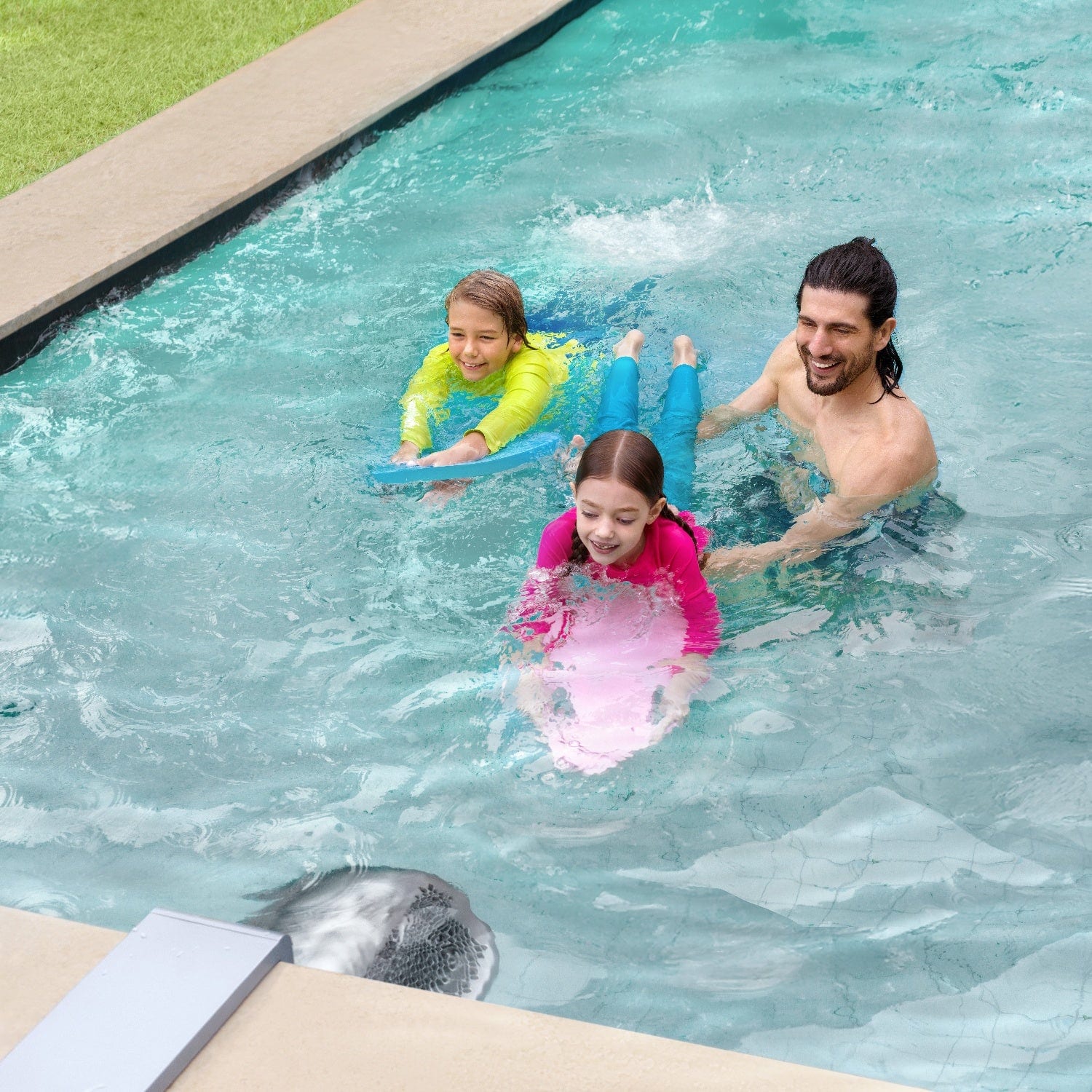
The M Series is designed for plug-and-play setup in about 10 minutes, with no plumbing, drilling or electrician required. It includes five swim modes, with controls via touchscreen, Bluetooth remote and app. The minimum recommended pool size is 5 m x 3 m.
Installation simplicity is a key point of difference. Unlike permanently installed systems that require professional fitting, the M Series is designed for the pool owner to set up without specialist trades.
iGarden provides a 2-year warranty for the M Series.
iGarden vs BADU SwimJets
BADU is an important benchmark because Speck Pool Products distributes BADU counterswim systems in Australia and describes itself as the accredited Australian distributor for SPECK products.
The BADU Jet Turbo uses propeller technology to generate what Speck describes as an even, smooth and splash-free flow. Its published maximum flow rate is 245 m³/h, adjustable across seven settings.
For stronger swimmers, the BADU Jet Turbo Pro increases published maximum flow to 350 m³/h and is specifically positioned towards performance-oriented training.
BADU also offers the Stream II, a more traditional submerged counterswim system using pumps and directional nozzles. This demonstrates how much technology can vary even within one manufacturer's range.
Compared with iGarden, BADU Turbo represents a more conventional permanent pool investment. The M230's manufacturer-published 230 m³/h figure sits close to the Turbo's 245 m³/h figure, but that does not prove the currents will feel equivalent. Their flow systems, geometry and measurement methodologies differ.
For consumers, the better question is whether they prioritise permanent propeller-based current quality and an established pool-equipment distribution channel, or the plug-and-play approach and lower total cost offered by iGarden.
iGarden vs Endless Pools Fastlane
Endless Pools' Fastlane is useful as a premium international benchmark because the manufacturer does not focus its main specification on m³/h.
Instead, Fastlane describes its Hydrodrive resistance current through swimming pace and current characteristics.
The current Fastlane specification lists dozens of adjustable speeds and a maximum pace equivalent to approximately 1:08 per 100 yards, using a remotely located 5 hp hydraulic motor. It can be deck-mounted to many existing pools or wall-mounted into new construction.
Endless Pools describes its swim currents as being designed to produce smooth, adjustable resistance for uninterrupted swimming. Its broader Hydrodrive specifications also publish current dimensions and swimming pace, highlighting how differently manufacturers quantify performance.
For a serious swimmer, this reinforces an important point: current width, depth, stability and usable swimming pace may matter as much as raw water volume.
Fastlane therefore sits closer to BADU's premium permanent-system proposition than to the plug-and-play iGarden M Series.
Australian buyers considering Fastlane should confirm current local availability, electrical requirements, installation support and Australian pricing before comparing total project costs.
M180 vs M230: which iGarden model fits you?
Since both iGarden models share the same plug-and-play format, the choice comes down to swimming intensity and budget.
| M180 | M230 | |
|---|---|---|
| Flow rate | 180 m³/h | 230 m³/h |
| Maximum speed | 3.3 m/s | 4.0 m/s |
| Power | 0.8 kW | 1.2 kW |
| Price | A$4,620 | A$5,720 |
| Best for | Recreational swimming, families, general fitness | Regular fitness, stronger swimmers, more demanding training |
| Voltage | 12V | 12V |
| Setup | Plug and play, approx. 10 minutes | Plug and play, approx. 10 minutes |
| Swim modes | 5 | 5 |
| Warranty | 2 years | 2 years |
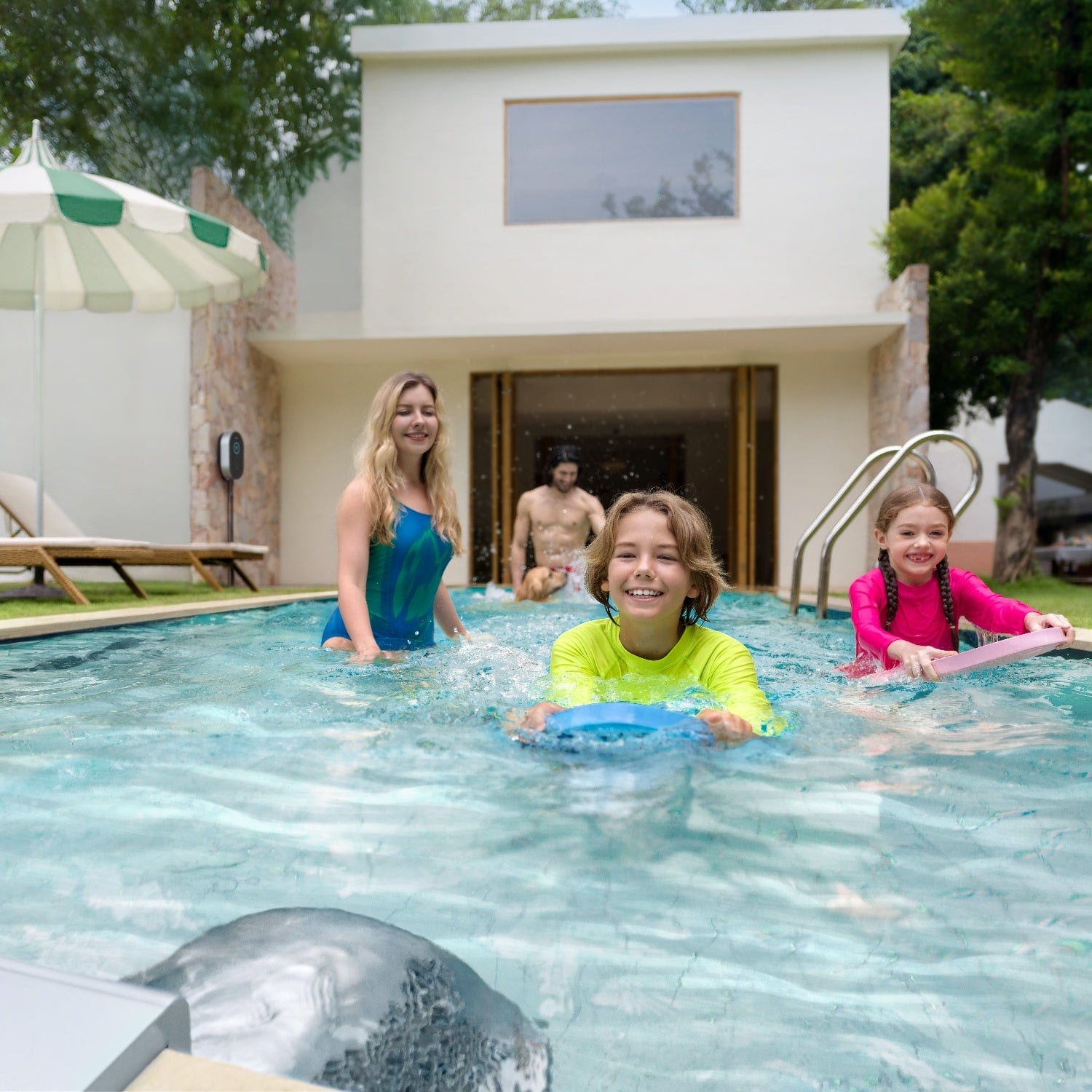
The M180 is a sensible starting point for households that want recreational swimming, family fun and general fitness. The M230 is worth the step up if the primary user swims regularly, wants more resistance or trains at a stronger pace.
Both models share the same controls, swim modes and plug-and-play format, so the decision is really about how much current the swimmer needs.
Which type of swim jet is right for you?
There is no universal winner. Based on the published characteristics of each system, different buyers should start in different places.
Existing family pool with minimal modification
Start with: iGarden M Series.
The M Series is particularly distinctive because permanent plumbing, pool-wall penetrations and fixed electrical connections are avoided. For more detail on adding a swim jet to an existing pool, see the dedicated retrofit guide.
Recreational swimming and family fun
Consider: iGarden M180 or BADU Turbo.
Both are positioned by their manufacturers for combinations of recreational swimming, exercise or family use. The M180 offers a significantly simpler installation path.
Regular fitness swimmer
Consider: iGarden M230, BADU Turbo/Turbo Pro or Fastlane.
At this level, current quality and your swimming pace become increasingly important. A demonstration before purchasing a higher-cost permanent system is worthwhile wherever possible. For training guidance, see the guide to swim jets for swimming, training and home fitness.
Competitive or powerful swimmer
Look beyond headline m³/h.
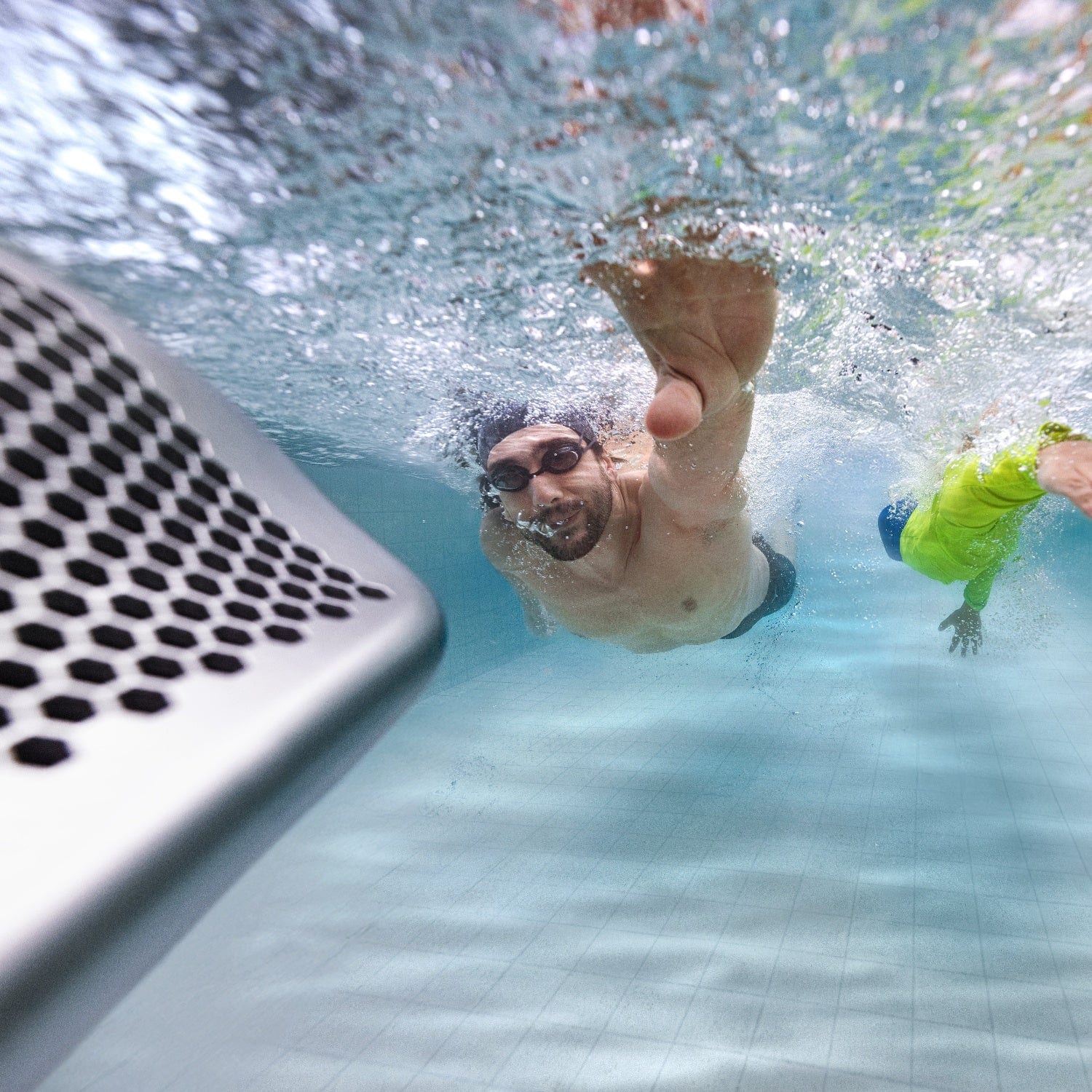
BADU Turbo Pro and Fastlane are explicitly designed or positioned for higher-intensity swimming. The M230's 4.0 m/s maximum speed also supports serious training.
A strong swimmer should ideally trial the actual current because swimming experience cannot be predicted reliably from one published number.
Small pool or plunge pool
Start with: iGarden M Series.
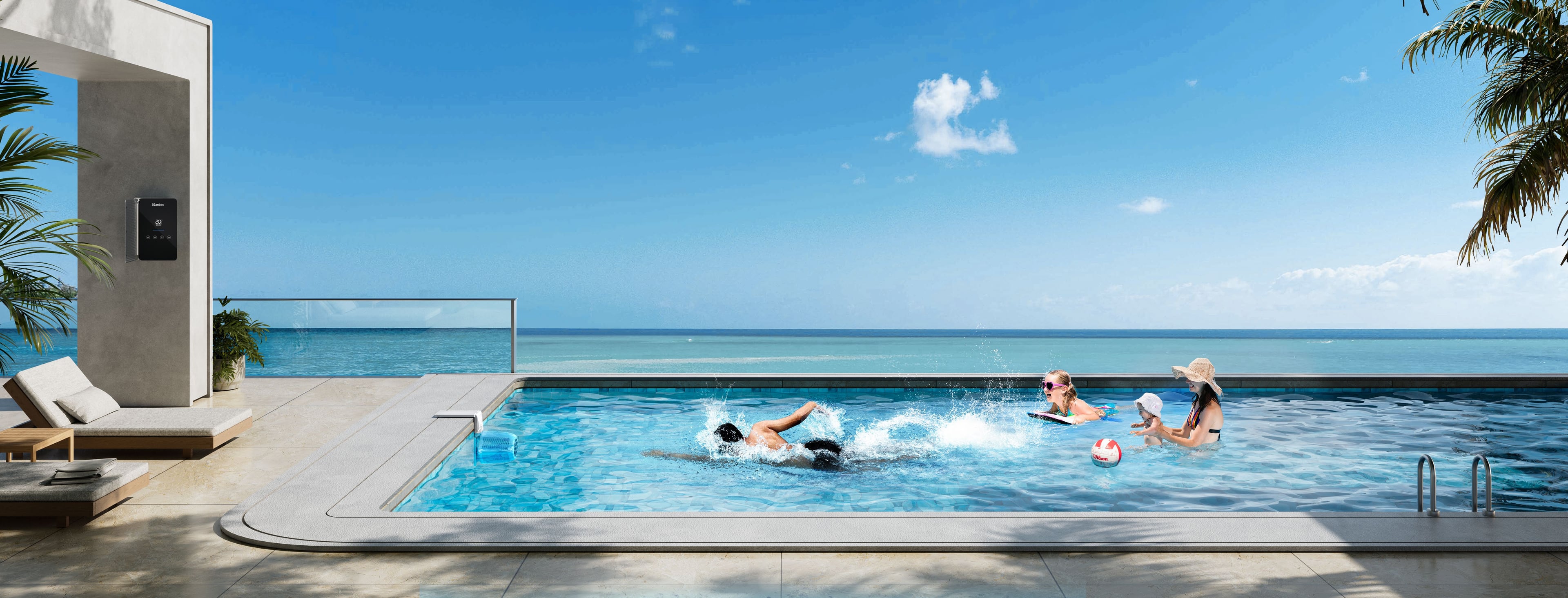
A swim-in-place system can make a short pool significantly more useful for exercise because continuous swimming does not depend on pool length. The M Series requires a minimum pool of 5 m x 3 m. The physical fit of the equipment and safe clearances still need to be confirmed. See the guide to swim jets for small, compact and plunge pools.
New pool construction
This is where the choice broadens. A new build allows integrated BADU or Fastlane installations to be considered before the pool structure and surrounds are completed, while the M Series can be added at any stage. For professional specification guidance, see the swim jet guide for builders, architects and designers.
What does a swim jet really cost?
Purchase price is only one component.
A sensible comparison should consider:
- Equipment
- Mounting
- Electrical work
- Pool modifications
- Installation
- Servicing
- Energy consumption
- Future replacement or removal
This particularly matters when comparing a plug-and-play system with a professionally installed permanent system.
The M Series pricing (A$4,620 for the M180 and A$5,720 for the M230) includes the complete system with no additional installation trades required. Permanently installed systems from BADU or Endless Pools will typically involve significant additional costs for professional fitting, electrical work and pool modifications.
For that reason, I recommend comparing total installed cost for your particular pool, not just the product advertised price.
Frequently asked questions
Is iGarden better than a traditional swim jet?
Not automatically. iGarden's strongest advantages are plug-and-play installation, safe 12V operation and competitive pricing. Permanent propeller systems such as BADU and Fastlane may be preferable where a buyer is prepared to invest more heavily in a dedicated long-term swimming installation.
What is the difference between the M180 and M230?
Both share the same plug-and-play format, 12V power, five swim modes and control options. The M230 delivers a stronger current (230 m³/h vs 180 m³/h) and higher maximum speed (4.0 m/s vs 3.3 m/s), making it better suited to regular fitness swimmers and stronger swimmers who want more resistance.
Can an iGarden swim jet be installed in an existing pool?
Yes. The M Series is designed for plug-and-play setup in about 10 minutes, with no permanent modification to the pool. The minimum recommended pool size is 5 m x 3 m. For a full walkthrough, see the guide to adding a swim jet to an existing pool.
Is a plug-and-play swim jet powerful enough for swimming?
Yes. The M180 delivers 180 m³/h at up to 3.3 m/s, while the M230 delivers 230 m³/h at up to 4.0 m/s. Both provide genuine swimming resistance across five adjustable modes.
Is a turbine or propeller swim jet better?
Propeller systems are generally designed to move a broader mass of water than traditional narrow nozzle jets, but actual swimming feel varies by system. BADU and Endless Pools each use different current-generation approaches, so an on-water demonstration is more useful than comparing one specification alone.
Can a swim jet replace a lap pool?
For continuous fitness swimming, a suitable swim jet can remove the need to travel from one end of a long pool to the other. It cannot reproduce every element of lap swimming, for example starts, turns or moving through a full-length pool, but it can allow sustained swimming in a much smaller space. For more on this topic, see the complete guide to swim jets in Australia.
The bottom line
The Australian swim jet market now spans products that solve very different problems.
- iGarden M Series stands out where plug-and-play installation, minimal construction, safe 12V operation and competitive pricing matter most. The M180 suits recreational and fitness swimming, while the M230 delivers more resistance for stronger swimmers.
- BADU Turbo and Turbo Pro offer established propeller-based counter-current technology through an Australian distributor.
- Endless Pools Fastlane remains a useful premium benchmark for buyers focused heavily on continuous swimming and the characteristics of the swimming current itself.
The most useful question is therefore not: "Which swim jet has the biggest number?"
It is: "Which swim jet creates the right swimming environment for my pool, swimming ability, installation requirements and budget?"
That is the comparison that should drive the decision.
Sources and methodology
Specifications and product information were reviewed against manufacturer, Australian distributor and primary product sources. Manufacturer specifications may use different testing and measurement methodologies and should not be interpreted as directly standardised comparisons.
Disclaimer: This report has been prepared for general informational purposes. All product specifications, performance figures, pricing, warranty information and other information in this report relies on information brought to us from the referred sources, including manufacturers, distributors and other cited third parties.
Swim Jets Australia has sought to present this information accurately, fairly and in a form that assists consumers to compare different swim-jet technologies. Swim Jets Australia has not independently laboratory-tested every product or verified every third-party performance claim and does not independently warrant such claims.
Flow rates, flow speeds and other performance figures may not be directly comparable between manufacturers because products use different technologies, testing methods and measurement points.
Product specifications, prices, promotions, availability, warranties, installation requirements and manufacturer recommendations may change without notice. Buyers should confirm current information with the relevant manufacturer, authorised supplier, installer or Swim Jets Australia before making a purchasing decision.
References
- Speck Pool Products Australia, BADU counterswim systems, Jet Turbo, Turbo Pro, Stream II: speckpool.com.au/product-category/swimjet-page
- Endless Pools, Fastlane Swim Hydrodrive technology, installation, performance: endlesspools.com/products/fastlane-series/fastlane-swim
- Endless Pools, product FAQs, Hydrodrive current specs: endlesspools.com/faq
Frequently Asked Questions
- How should I compare different swim jet brands? +
- Assess the type and width of current, installation requirements, swimming ability match, pool compatibility, adjustability, Australian warranty and service support, and total installed cost. Do not choose based on a single specification like flow rate.
- Why can't I just compare swim jets by flow rate alone? +
- Different manufacturers use different technologies, measurement locations and ways of describing their currents. Two systems with similar flow numbers may feel very different in the water because flow width, turbulence and current stability all affect the swimming experience.
- What should I consider when buying a swim jet for an existing pool? +
- Start with how much pool modification you are willing to accept. The M Series requires no permanent plumbing, pool-wall penetrations or fixed electrical connections, making it ideal for existing pools where you want to avoid structural work.
- What is total installed cost and why does it matter? +
- Total installed cost includes the equipment, mounting, electrical work, pool modifications, installation, servicing and energy consumption. A lower product price can become less attractive if the system requires expensive additional work to install.
- Can a portable swim jet match the performance of a built-in system? +
- For many swimmers, yes. The M230 delivers 230 m³/h at 4.0 m/s, which provides genuine swimming resistance. Judge flow quality, adjustment range and stability rather than assuming a portable system is automatically less capable.
- What is the best swim jet for a family pool? +
- A system with a wide adjustment range suits mixed-ability households best. The M Series offers five swim modes from gentle to strong, touchscreen and app control, and plug-and-play installation in existing pools from 5 m x 3 m.
- How important is Australian warranty and service support? +
- Very important. Confirm that the manufacturer has local parts availability, Australian warranty coverage and accessible service support. The M Series comes with a 2-year warranty and is sold through Swim Jets Australia.
- Should I try a swim jet before buying? +
- If possible, yes. Swimming experience varies between products and cannot be predicted reliably from published specifications alone. A trial swim is the most reliable way to compare current width, stability and comfort.
- What swim jet suits a small pool or plunge pool? +
- The M Series is well suited to compact pools because it requires a minimum of only 5 m x 3 m, has a low-profile portable design and does not need permanent structural work. It adds genuine swimming function without consuming valuable deck space.
- What questions should I ask before choosing a swim jet? +
- Ask about current width and quality, minimum pool dimensions, electrical requirements, installation method, adjustment range, warranty terms, parts availability in Australia and total installed cost including any additional work needed.
Ready to upgrade your pool?
Explore the Swim Jets Australia range or get a tailored recommendation in two questions.